DE ARCHITECTS
1/1
S-707
year 1926-1929
material glass, metal, plant fiber, wood
source title Eileen Gray
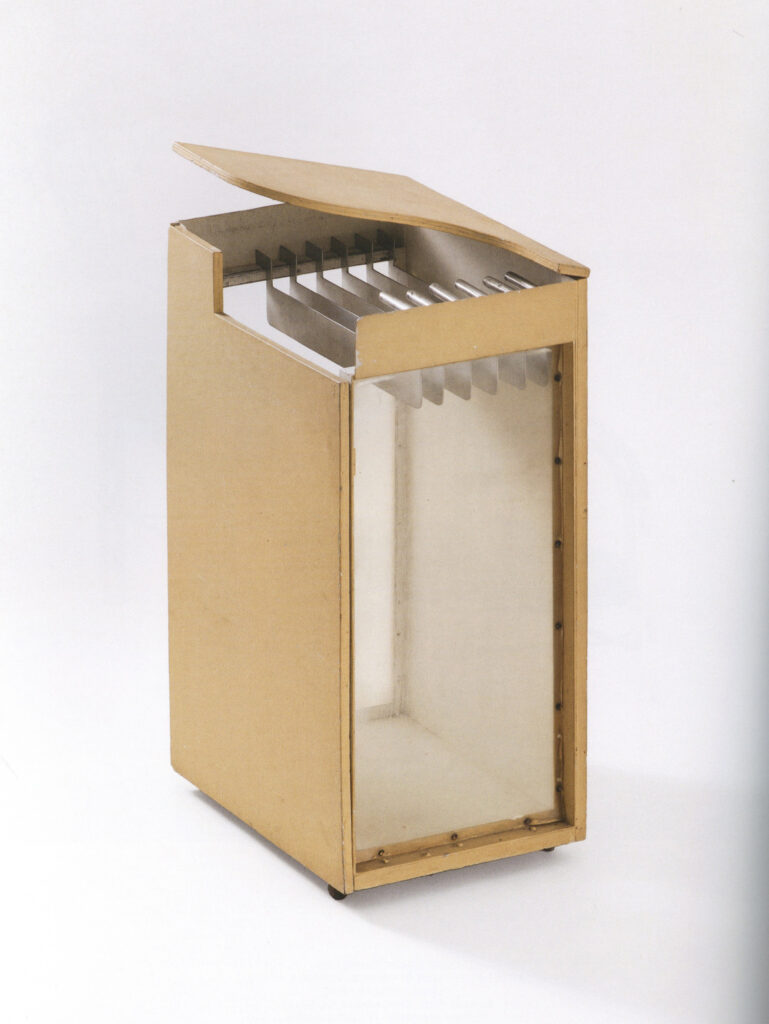
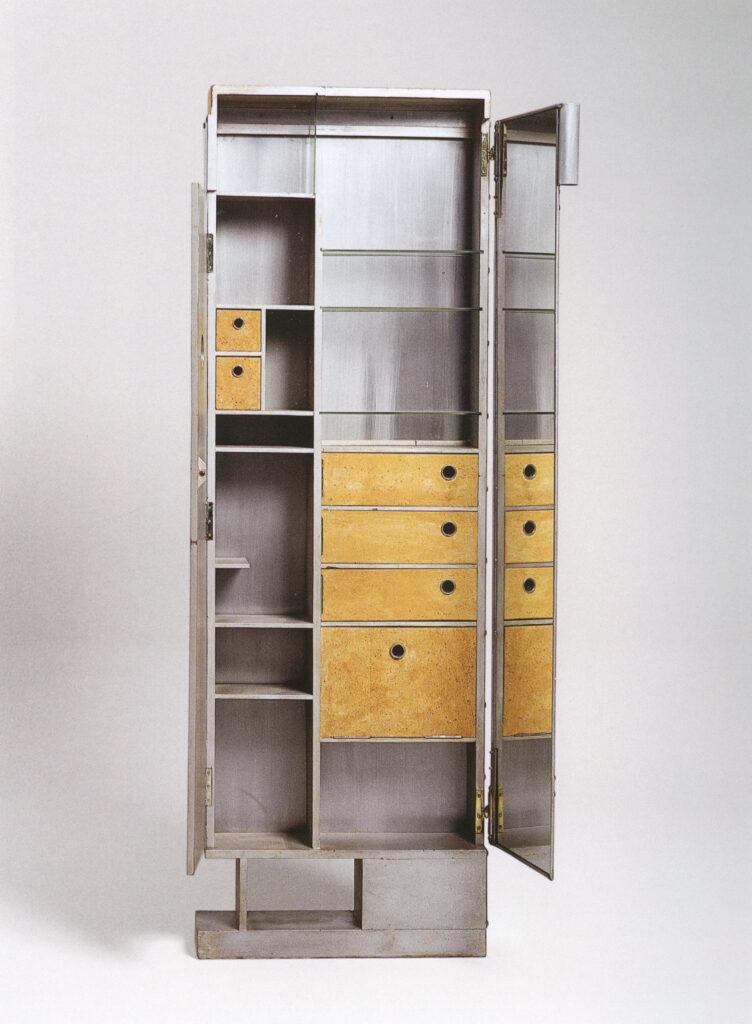
info The first example of this vanity closet was created for the master bedroom of the E-1027 house designed by Eileen Gray with the Romanian architect Jean Badovici. The house, on an outcrop overlooking the sea at Roquebrune-Cap-Martin on the French Riviera, was an open-plan building raised on stilts with horizontal windows and a flat roof, built according to the rules formulated by Le Corbusier. This vanity closet was designed to separate the toilet space from the bedroom itself. Eileen Gray made the unusual choice of aluminum for the closet as she considered it “a beautiful material whose coolness is very pleasant in warm climates.” The closet, a perfect example of the importance the artist accorded to rationality, shows how she incorporated her furniture pieces into the interior structure. As the narrowness of the closet makes it unstable, the artist fitted it with a base unit that could be weighted down and with an aluminum plate on the top that could be connected to a metal tube to attach the closet to the ceiling. Painted wooden structure clad in aluminum sheets; mirrors; glass shelves; movable and swiveling drawers lined with cork and covered with silver leaf. Furniture from E-1027, Roquebrune-Cap-Martin.
read more