DE ARCHITECTS
1/5
2/5
3/5
4/5
5/5
S-098
year 2003
material glass, other, wood
source title Terunobu Fujimori: Architect
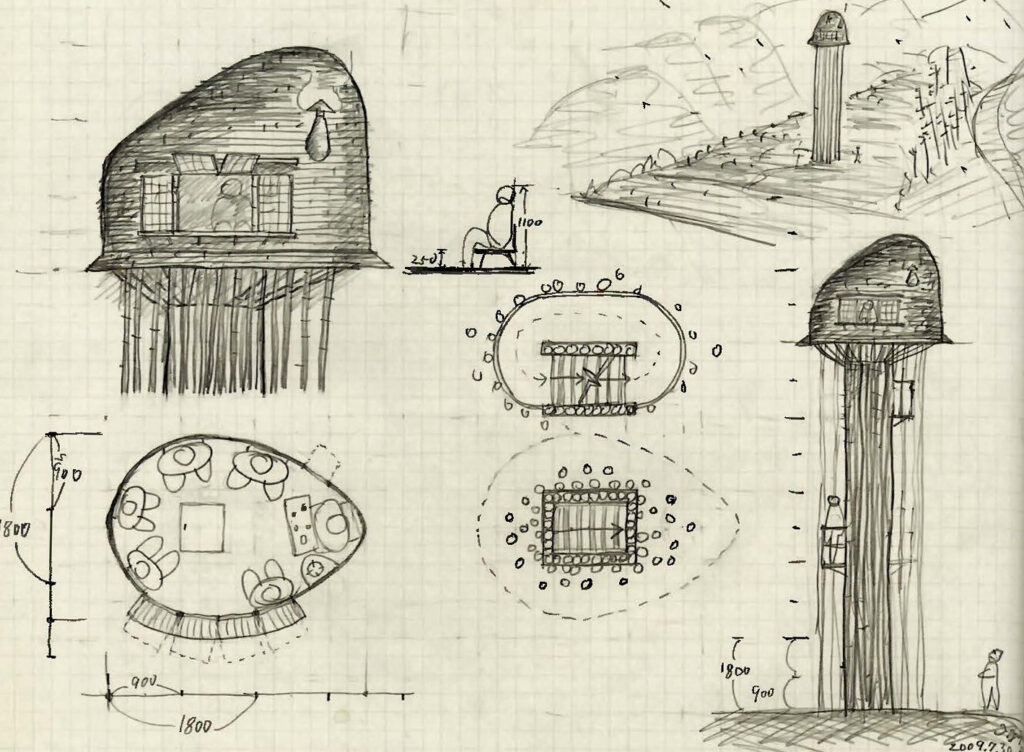
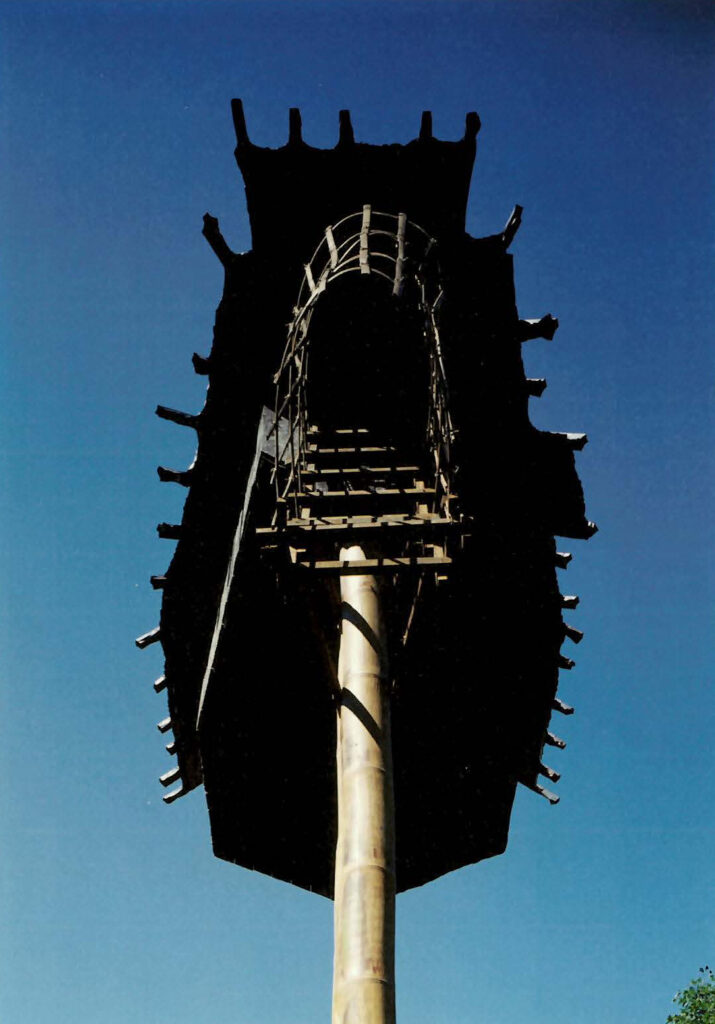
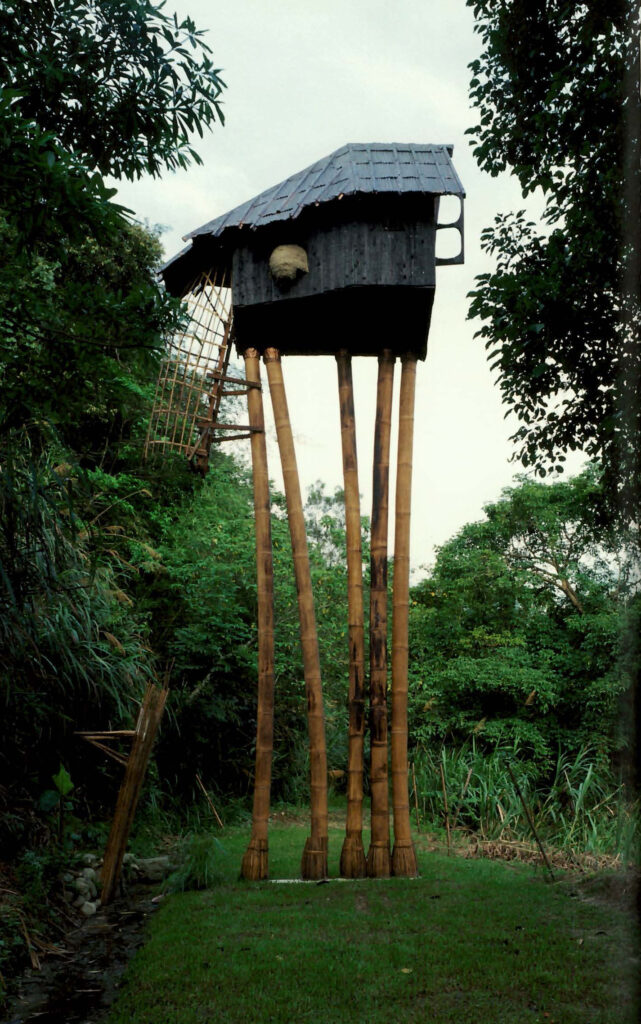
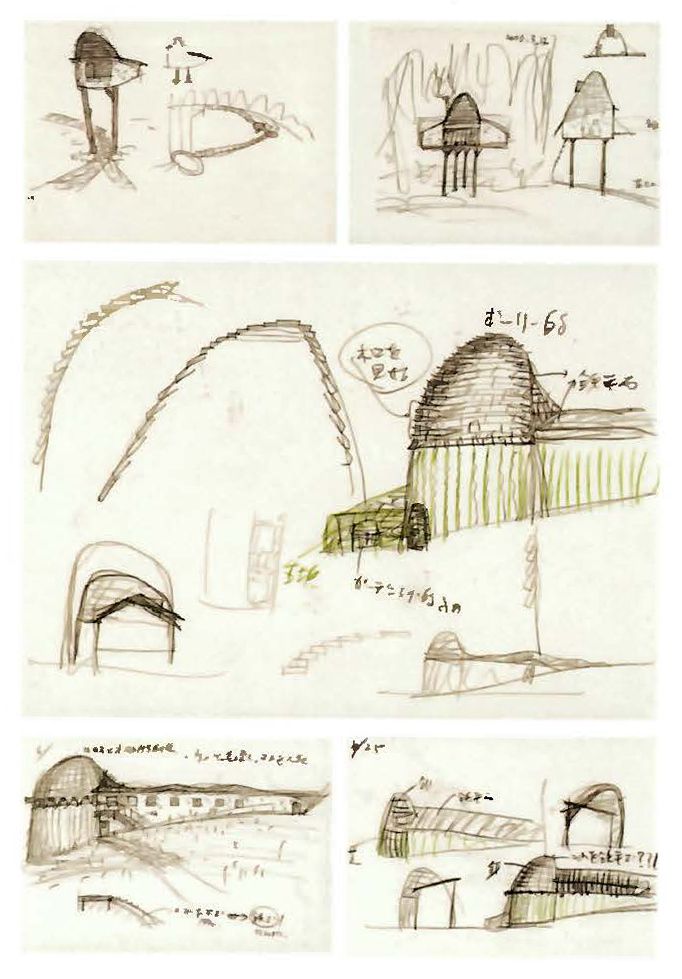
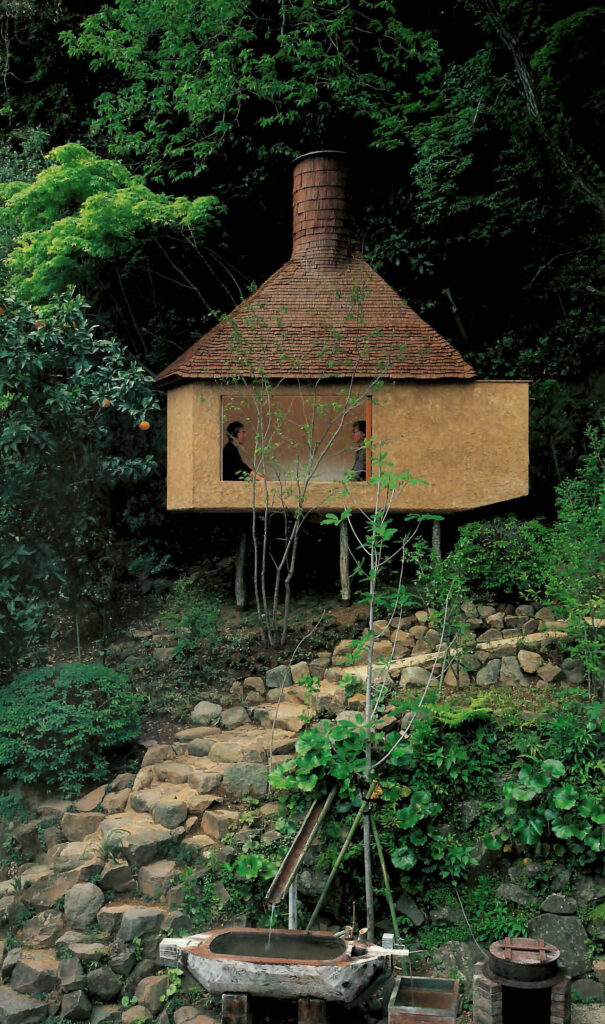
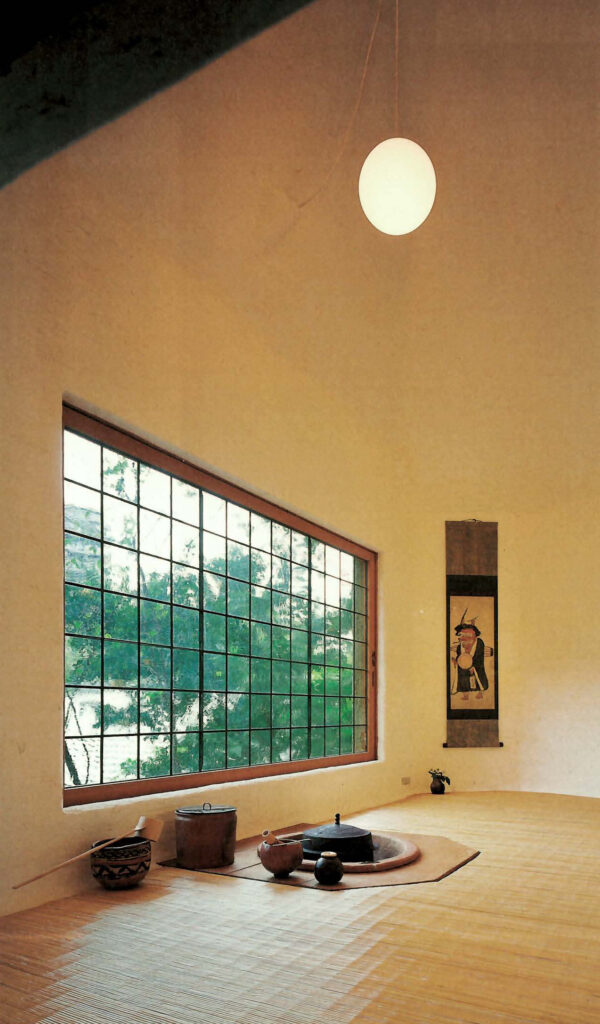
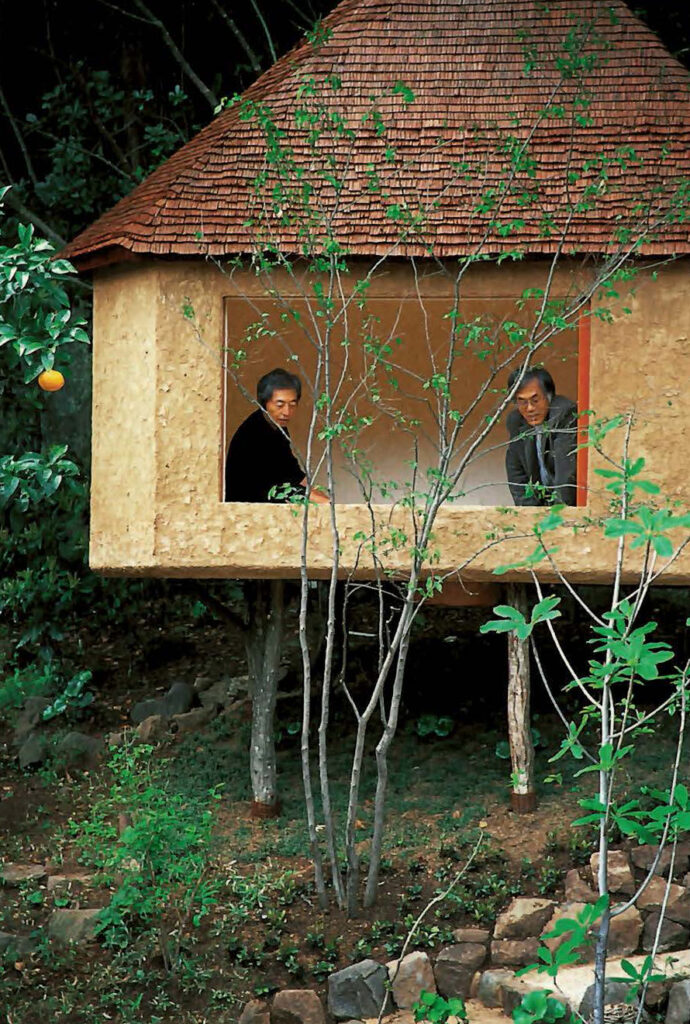
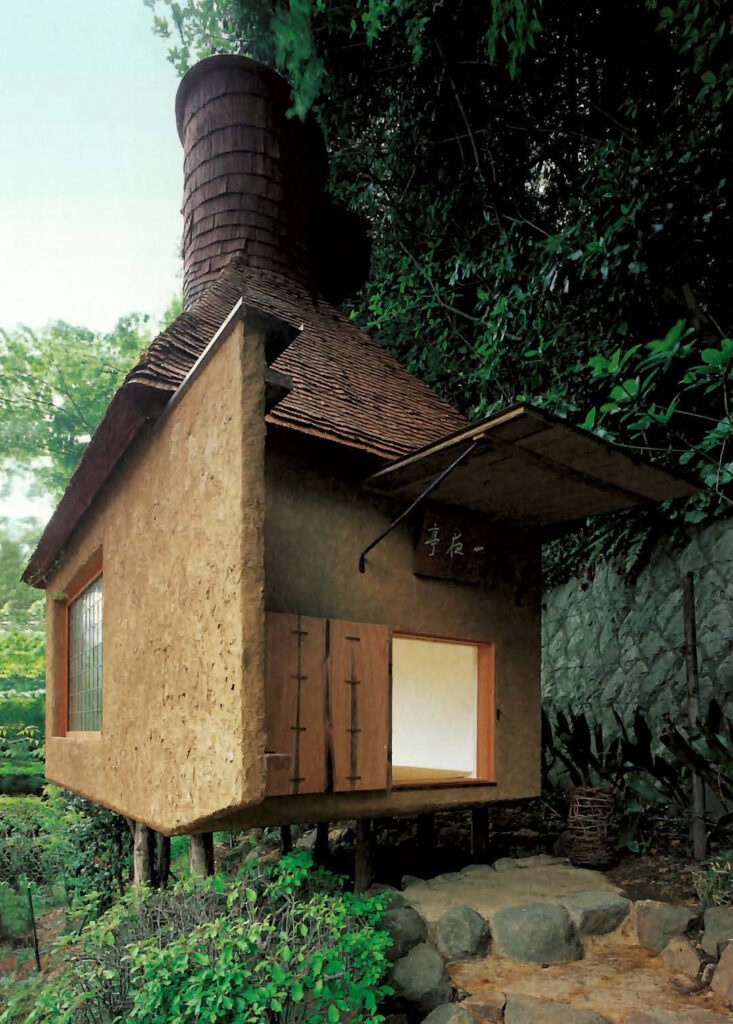
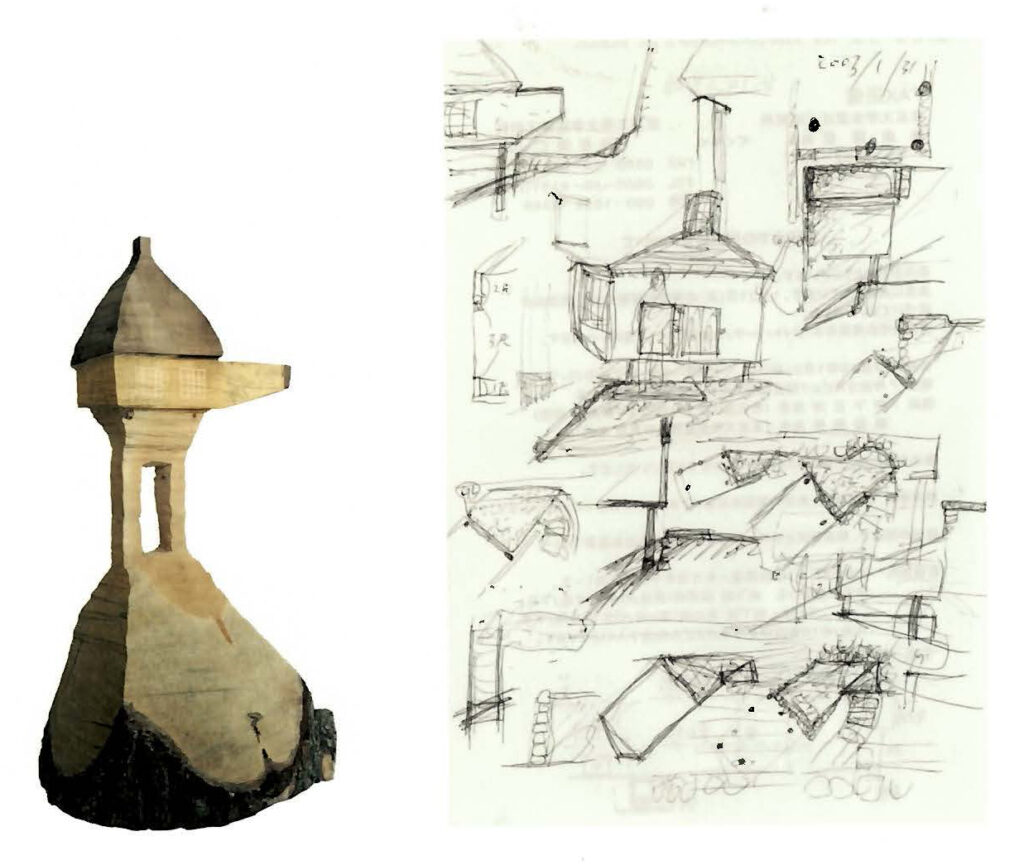
info Instead of having a Tokonoma (built-in recessed space), the far end of the room has a small alcove in which a painting is hung, and a flower is placed. The master sits in front of the hearth. Four people can gather around the hearth. The window is made of hand-blown glass offset from the exterior wall. There is a skylight installed at the top end of the cylindrical ceiling. Through the tree leaves, Ichiya-tei (One-night Teahouse) overlooks a house with a tiled roof, which is the country villa of Fumimaro Konoe, built at the beginning of the Shōwa Era. The traditional style of the Ichiya-tei, such as its mud wall, cryptomeria bark shingle roof, and hand-blown glass, do not impair the historical appearance of the Konoe country villa and the surrounding natural environment. The entrance is based on Rikyū’s traditional nijiriguchi—the small doorway into a teahouse. This small opening, though which guests have to crawl, underlines the difference between the tearoom and the outside world.
read more