DE ARCHITECTS
1/3
2/3
3/3
S-141
year 2006
material metal, textile
source title The Modern Japanese Tea Room
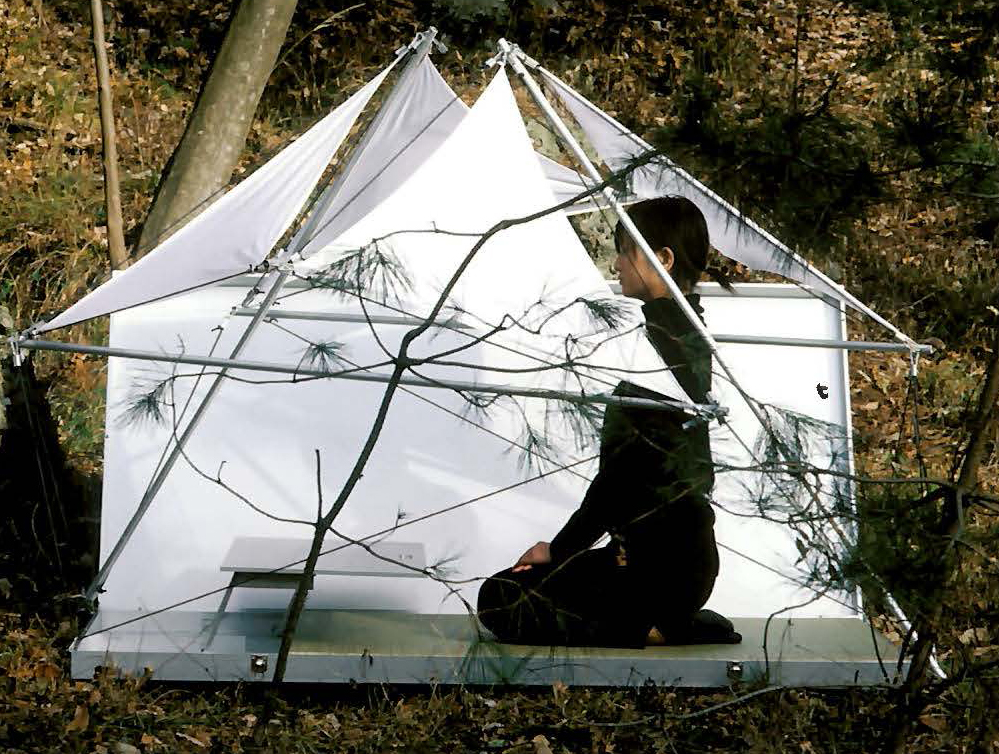
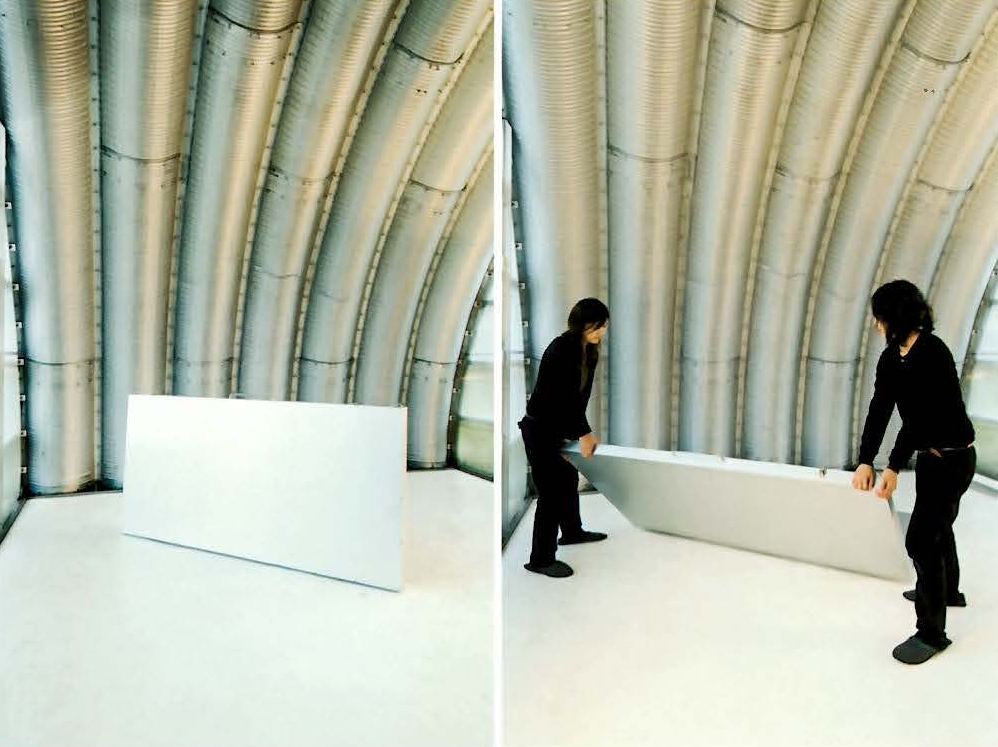
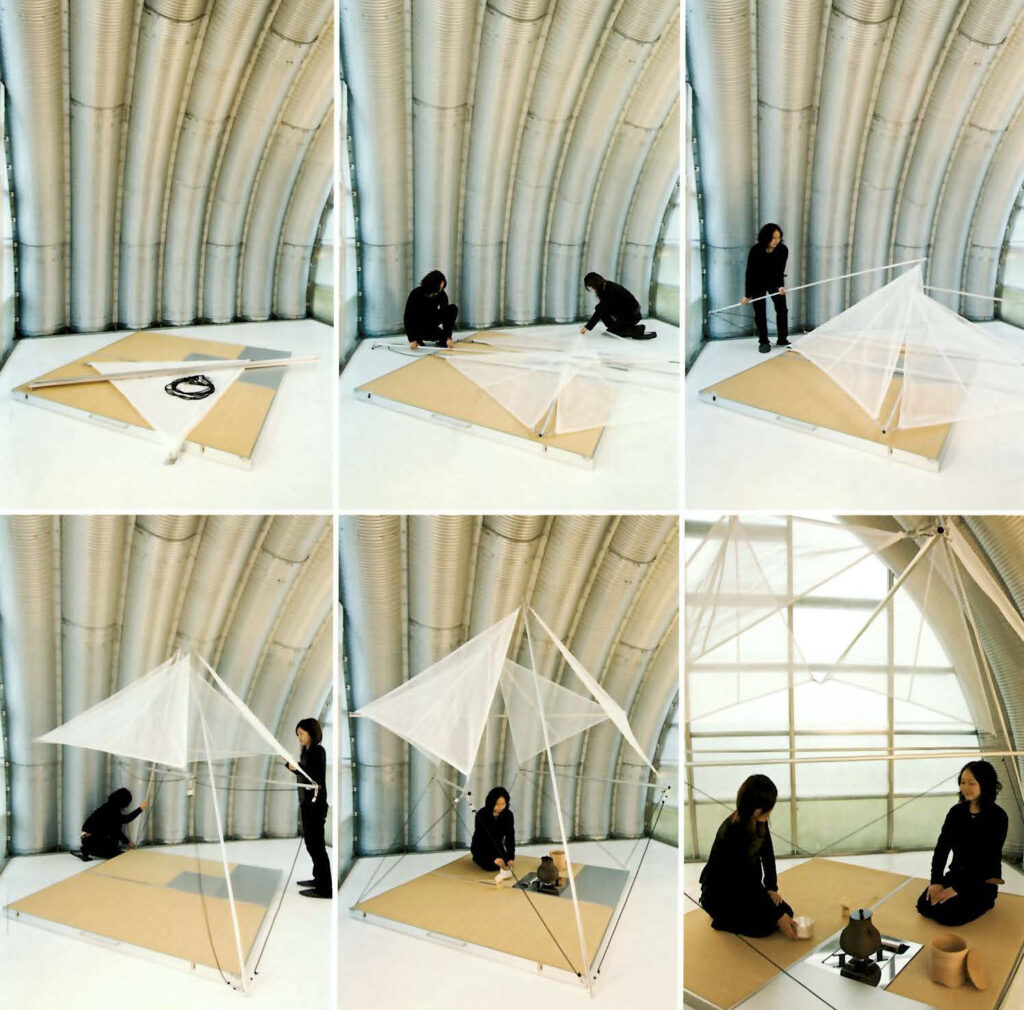
info A development of an earlier design that functioned, less specifically as a meditative space, Nijou (a measurement of area meaning “two-tatami space”) was created by designer Toshihiko Suzuki as a portable tea-ceremony room, completely functional for one tea master and one guest. Suzuki’s fascination with aluminum led him to the idea of a large case that would unfold to reveal two tatami mats in traditional igusa straw—combining modern industrial methods with the traditional. Ultimate weight reduction was needed for portability, and the structure chosen was 10 mm-thick aluminum honeycomb—two solid sheets sandwiching the honeycomb core, producing the strongest panel structure with the lightest weight. A complex structural arrangement of aluminum tubes and elasticated shock cords is then erected to support four triangular sails that act as a light ceiling. This superstructure is based on Buckminster Fuller’s “tensegrity” principle, in which tension is used primarily and compression secondarily. A gas-fueled cooker for heating the water used in the ceremony fits into the base. Nijou is part of the designer’s continuing exploration of the connection and tension between products and space.
read more