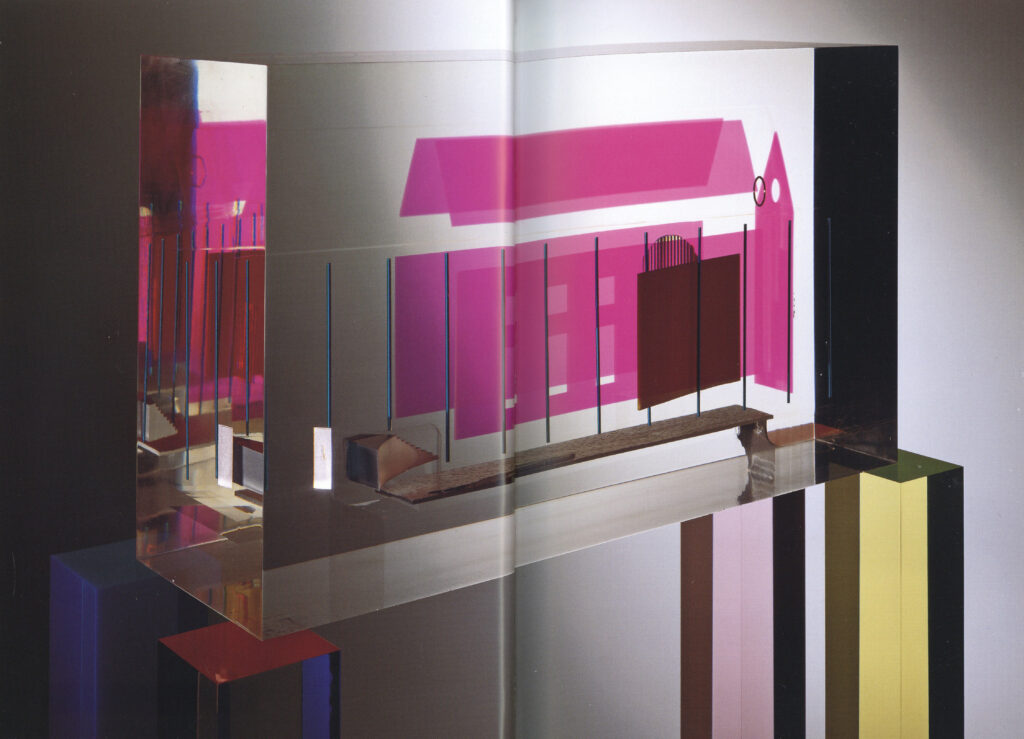
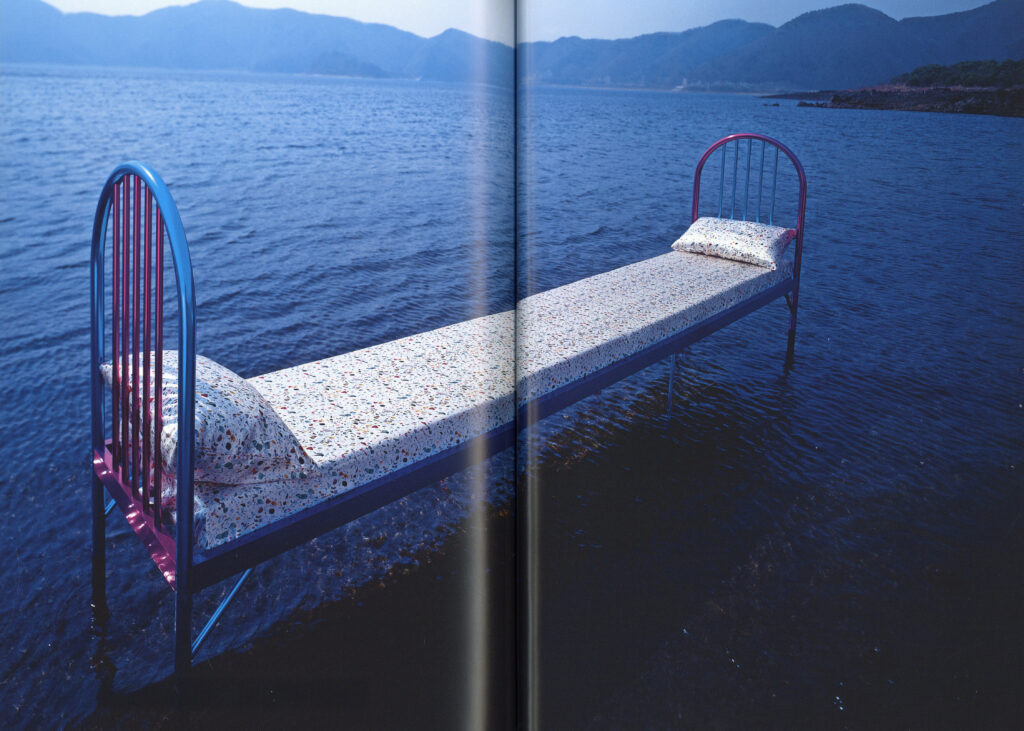
DE ARCHITECTS
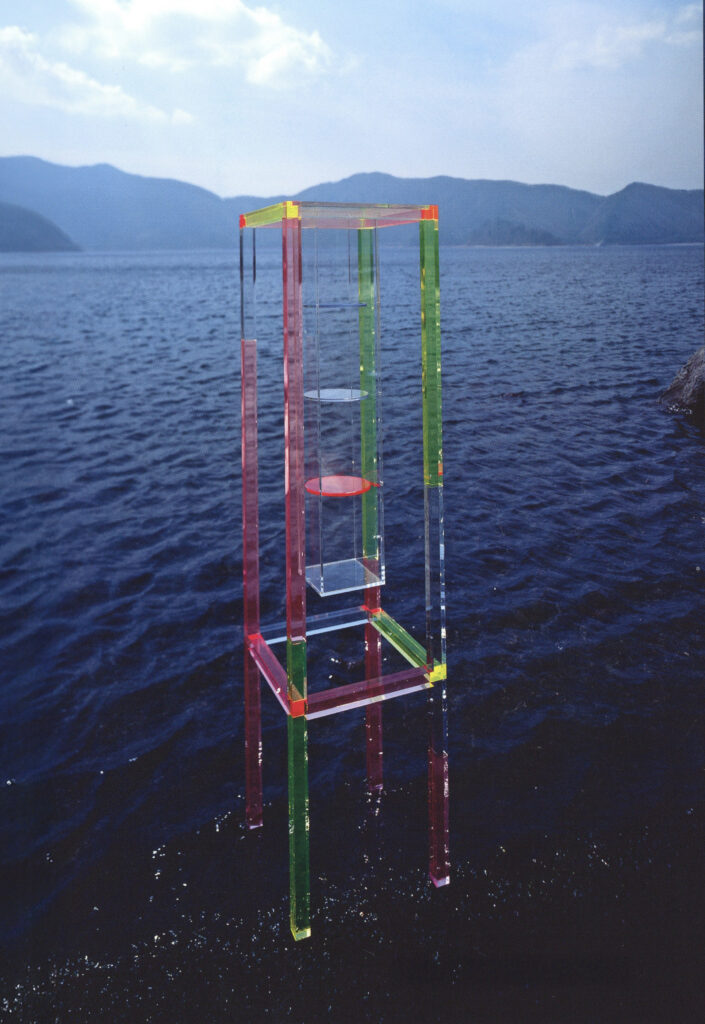
1/1
S-853
year 1989
material plastic
source title 倉俣史朗を再読する:現代インテリアデザインへとつながる思想、文化、技術
info The Cabinet of Curiosities is an important example of Shiro Kuramata’s late work where he explored the possibilities of perspex acrylic. He first used plastics in the late 1960s and experimented with impregnating objects in clear acrylic later. The geometric arrangement of square-section and rectangular elements of the cabinet is severe and Modernist in character. The radiant and expressive colour of the object however, is influenced by the playful Postmodern palette common in the 1980s. This combination of expressive and reductive elements is typical of Kuramata’s design sensibility. The cabinet’s beauty - apparently described by Kuramata with the Japanese term ‘neiro’, or ‘sound-colour’ - is enhanced when light passes through the object, producing a coloured shadow on the floor and wall. A vertical unit with circular shelves seems to float magically within the box described by the cabinet’s tall, slender legs. One wall of this unit is a removable door which is difficult to see or use. Any objects placed within the cabinet seem to have been magically encased inside. The title, Cabinet of Curiosities refers to the early modern Kunstkammer, in which extraordinary objects of nature and artifice were displayed in juxtaposition.
read more