DE ARCHITECTS
1/3
2/3
3/3
S-731
year 1958
material metal
source title Why write a book on Enzo Mari
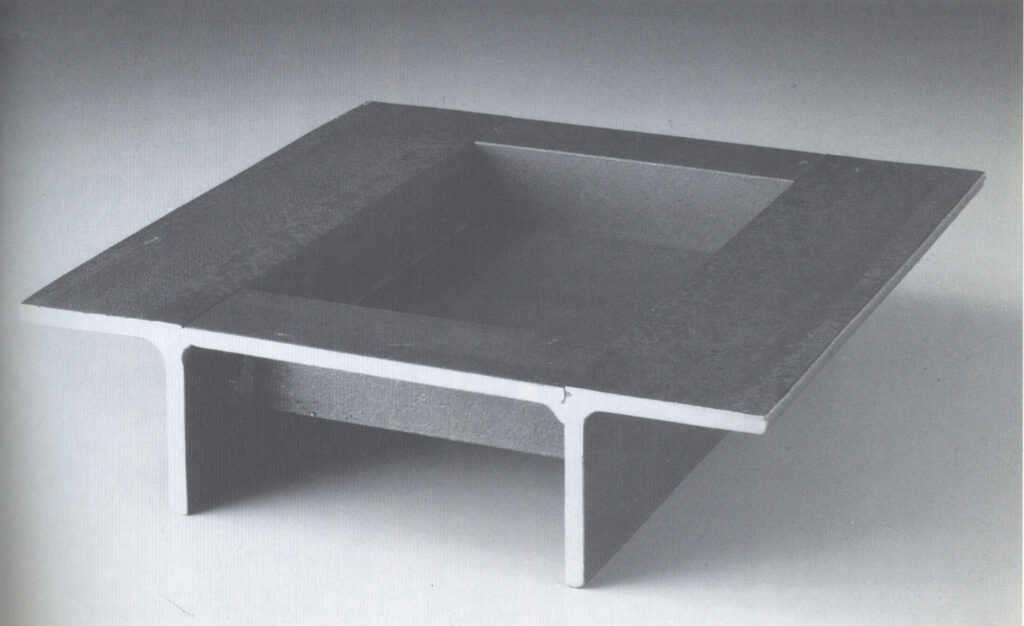
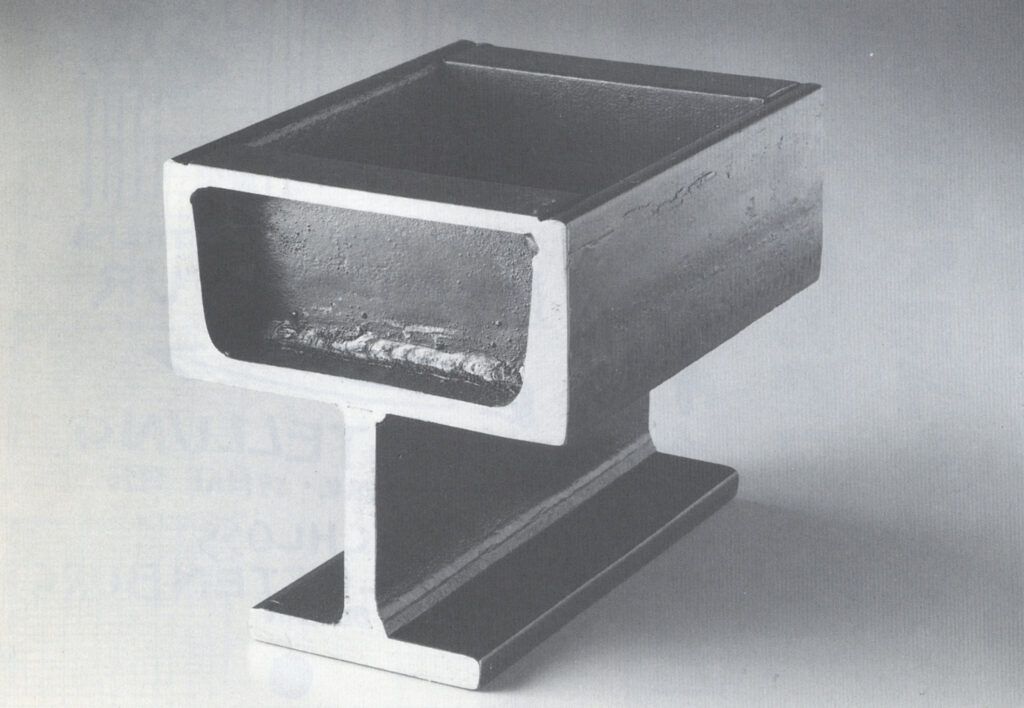
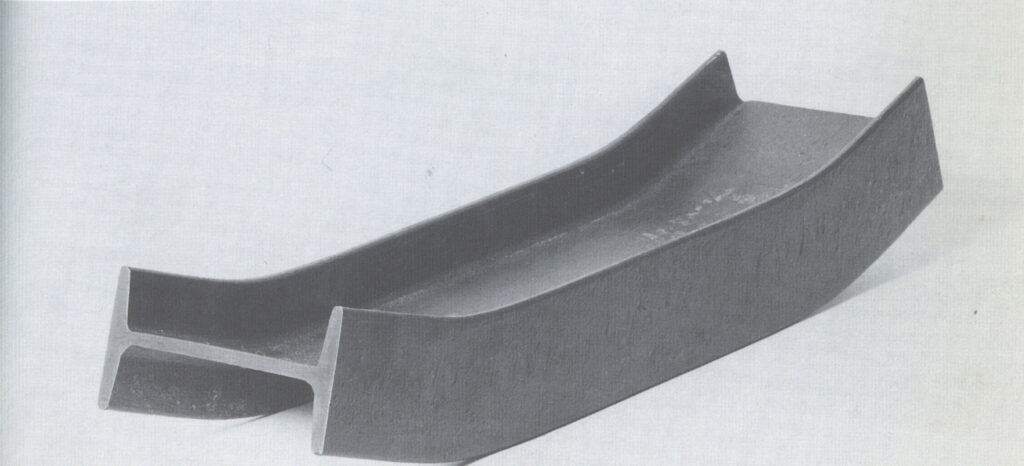
info One of Mari’s strongest, most transgressive and synthetic projects comes within this research context: the contenitori in profilato di ferro, Putrella (1958). Here, Mari had an instinctive, gut reaction: “... how do I see the iron beam? Its laws are clear, its form perfect... I went to Danese and told them that I wanted to do an exhibition on the beauty of the iron beam... I curved an iron beam, I put one on top of another and so forth... I wanted to show that when there is no need for aestheticism, the use of semi-machined products always produces a perfect object”. On the art front Mari had already experimented the possibility of using prefabricated components, now on the terrain of design for industry he brought about the creative and functional transposition of an element, the iron beam, recognized as a construction unit. Actually by gently curving the end of the double T beam, he alluded to an abstract tray function. In this way, the assumption of an absolute form such as that of the double T beam, in relation to a simple sign that pro-duces a deviation of function, led this object to be the allegory of all design (“I take an industrial object, a pure, lovely object, I make a small change, I introduce a discordant element, that is design”).
read more