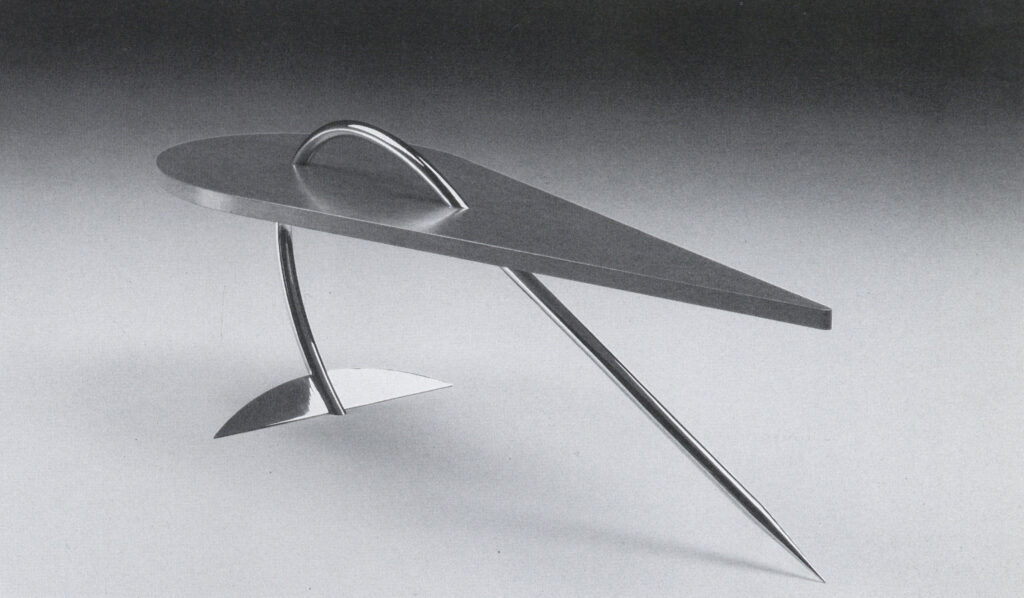
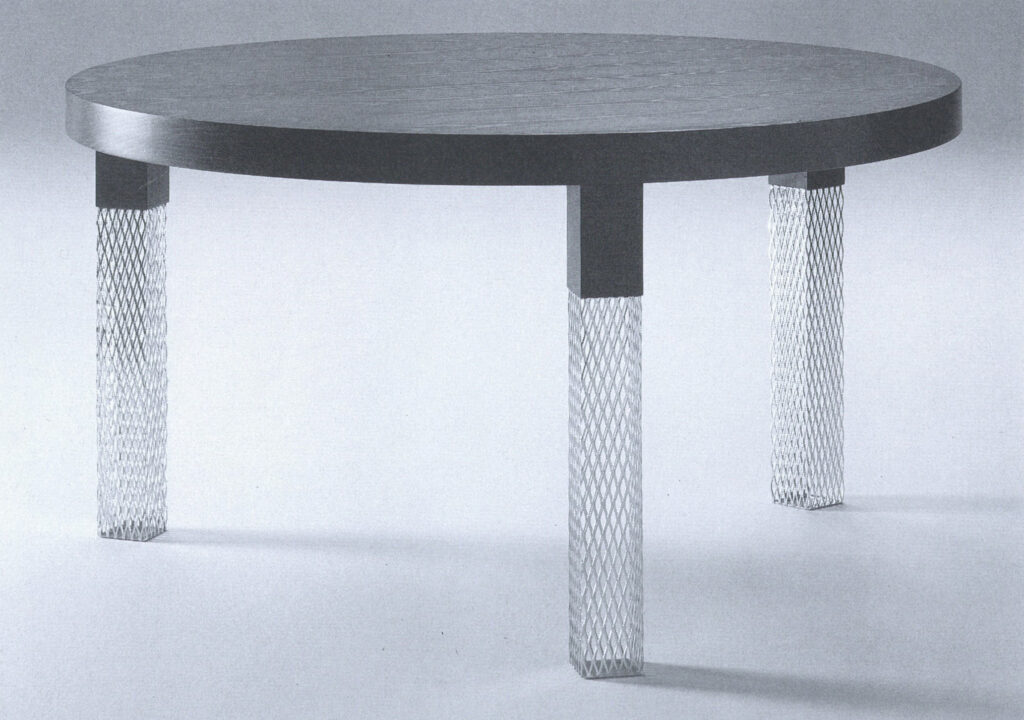
DE ARCHITECTS
1/1
S-557
year 1987
material metal, wood
source title New Italian Design
info MICHELE BARRO SAVONUZZI was born in Ferrara, studied industrial design in Milan, and then from 1981 to 1984 collaborated with Sottsass Associati. This experience must have given him the necessary self-confidence to cope with the next step in his career: two years in Japan, spent working first with the Kuramata Design Office and for Plus, an office furniture company. In 1986 he returned to Milan, and felt that he was sufficiently established to open a design office of his own. “I’ve done quite a lot of furniture design,” he says. “In the future I would like to move away from what is still largely crafts-orientated production towards industrial design. Barro Savonuzzi doesn’t think of his work as having a particular style. He is drawn more to identifying objects that need to be redesigned. “Beds and chairs are used today pretty much as they were twenty years ago,” he says, “so changing the shape of them is not particularly meaningful. By contrast, camera technology has evolved enormously in a couple of decades, yet the shape of them has remained almost the same. I think this is where the future of industrial design lies.”.
read more